Chapter 1: Two ways in
MLCRough draws the way a person with a pen draws: lines do not quite meet, edges are gone over twice, areas are hatched rather than filled. The library is a fork of Rough.js by Preet Shihn, and that part comes from there.
What was added here is two things. The first is a removal: every dependency on the DOM and on canvas is gone. The library produces strings, not elements. So it runs in Node, in the browser, in a worker, in a build step.
The second follows from that, and is the reason this manual exists.
The first way: describe shapes
You tell the library what to draw.
import mlcrough from 'mlcrough';

const rc = mlcrough.svgString();
const node = rc.rectangle(10, 10, 200, 120, { fill: '#7c3aed' });

console.log(mlcrough.serialize(node));
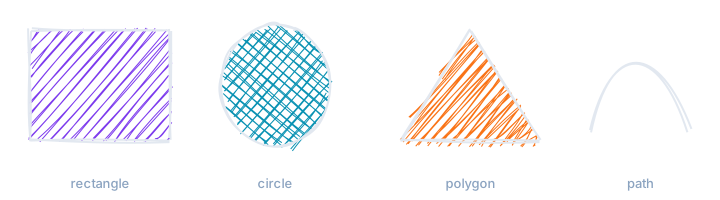
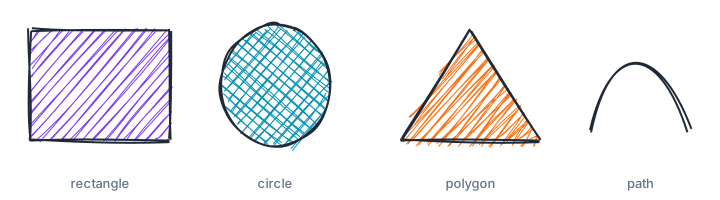
Out comes a group of paths — not a <rect>, because a hand-drawn rectangle is
no longer one. Four edges, each drawn twice and each a little off, plus the
hatching of the fill.
The second way: hand it a finished SVG
The first way assumes the drawing is yours to make. Often it is not. The diagram comes out of Mermaid, the graph out of Graphviz, the chart out of a charting library — finished SVG that just needs to look different.
const sketch = mlcrough.roughen(svgText, { roughness: 1.4 });roughen() reads a finished document, replaces every shape with its hand-drawn
counterpart and leaves everything else alone. This is where the removed DOM
dependency stops being a detail and becomes the precondition: the interesting
inputs are produced by other programs, and the whole chain has to run on a
server, in a pipeline or in a documentation build — without a browser.


roughen() does, drawn by Mermaid — and then by roughen(). Chapter 3 walks through this.What this manual does not claim
A sketched drawing is not decoration. It says something, and what it says is: this is provisional. A draft, an estimate, a proposal still being discussed. For a measurement report or a balance sheet it is the wrong choice — there the clean line rightly claims precision.
The value lies exactly where the clean line promises too much.